

Where to Find Australian Designers Making Hand-Finished Cotton Tops
Find Australian designers creating signature cotton tops with hand-finished embroidery by exploring independent labels that prioritize artisanal craftsmanship over mass production. This guide covers how to identify these brands, the specific organic cotton fabrics they use, and how to care for these premium garments. We focus on the intersection of modern design and traditional textile techniques to help you build a wardrobe of lasting value.
Understanding the Craft: Design vs. Manufacturing
Many shoppers confuse the location of design with the location of manufacturing. A brand is considered Australian if the creative direction, pattern making, and design oversight occur within Australia. However, the physical production of garments often takes place in specialized workrooms abroad where specific artisanal skills are preserved. This distinction is critical when evaluating the authenticity of a label. You are buying the design intelligence and quality control of an Australian studio, supported by the traditional craftsmanship of skilled artisans.
The Role of the Designer
The designer is the primary authority on the garment's aesthetic and structural integrity. In premium Australian fashion, the founder or lead designer often remains deeply involved in the production process. They select the fabrics, define the embroidery patterns, and visit the workrooms to ensure the final product matches the original sketch. This level of involvement ensures that the hand-finished details are not just decorative but integral to the garment's identity.
Why Hand-Finishing Matters
Hand-finishing refers to the manual application of details such as embroidery, buttonholes, and edge stitching. Unlike machine-embroidered items, which can look uniform and flat, hand-finished pieces have texture, depth, and slight variations that prove human involvement. This process is slower and more expensive, but it results in a garment that feels more personal and durable. The investment in these techniques is a hallmark of brands that value longevity over fast fashion trends.
Australian Designer Brands to Watch
When searching for a signature cotton top with hand-finished details, look for brands that are transparent about their supply chain and design process. Say The Label is a prime example of this approach. Designed in Melbourne by Sophie, the brand creates everyday pieces that are elevated through handcrafted details. The label focuses on a small, intentional collection rather than a vast, fast-turnover inventory. This allows for a deeper focus on fabric quality and artisanal finishing.
Identifying Authentic Craftsmanship
Authentic craftsmanship is evident in the specific techniques used. For instance, the use of French knots, blanket stitch, and scalloped edges are traditional methods that require skilled hands. Brands that highlight these techniques in their product descriptions are signaling a commitment to quality. You should look for language that describes the "hands" behind the garment, not just the "factory." This transparency helps you distinguish between mass-produced items with printed patterns and true hand-finished embroidery.
The Melbourne Design Hub
Melbourne has emerged as a significant hub for Australian textile design. The city's strong design education sector produces graduates who are well-versed in both contemporary aesthetics and traditional textile arts. Brands based in this region often leverage local design talent while partnering with international artisans to execute complex handwork. This global collaboration allows Australian designers to offer unique, high-quality pieces that reflect a blend of modern sensibility and ancient craft.
Organic Cotton Blouses and Fabric Quality
The base fabric of a hand-finished top is just as important as the embroidery itself. Premium brands often choose natural fibres, particularly cotton, for their breathability, durability, and ability to hold embroidery well. Organic cotton is a preferred choice for many conscious consumers because it is grown without synthetic pesticides or fertilizers. This not only benefits the environment but also results in a softer, more skin-friendly fabric. When evaluating a blouse, check the fabric composition and certifications to ensure you are getting what you pay for.
Why Cotton is Ideal for Embroidery
Cotton is a sturdy fibre that can withstand the tension of hand-embroidery without tearing or distorting. It also holds its shape well, which is crucial for structured blouses and shirts. The weave of the cotton, whether poplin, canvas, or cambric, affects how the embroidery sits on the surface. A tighter weave provides a smoother canvas for detailed work, while a looser weave adds texture and depth. Understanding these fabric properties helps you choose a top that will maintain its integrity over time.
Certifications and Standards
Look for certifications such as OEKO-TEX, which ensures that the fabric has been tested for harmful substances. This is particularly important for garments that are worn close to the skin. Brands that prioritize health and safety will often highlight these certifications on their product pages. By choosing certified organic cotton, you are supporting a supply chain that values worker safety and environmental sustainability. This aligns with the broader ethos of slow fashion, where quality and ethics are paramount.
Hand-Finished Embroidery Techniques
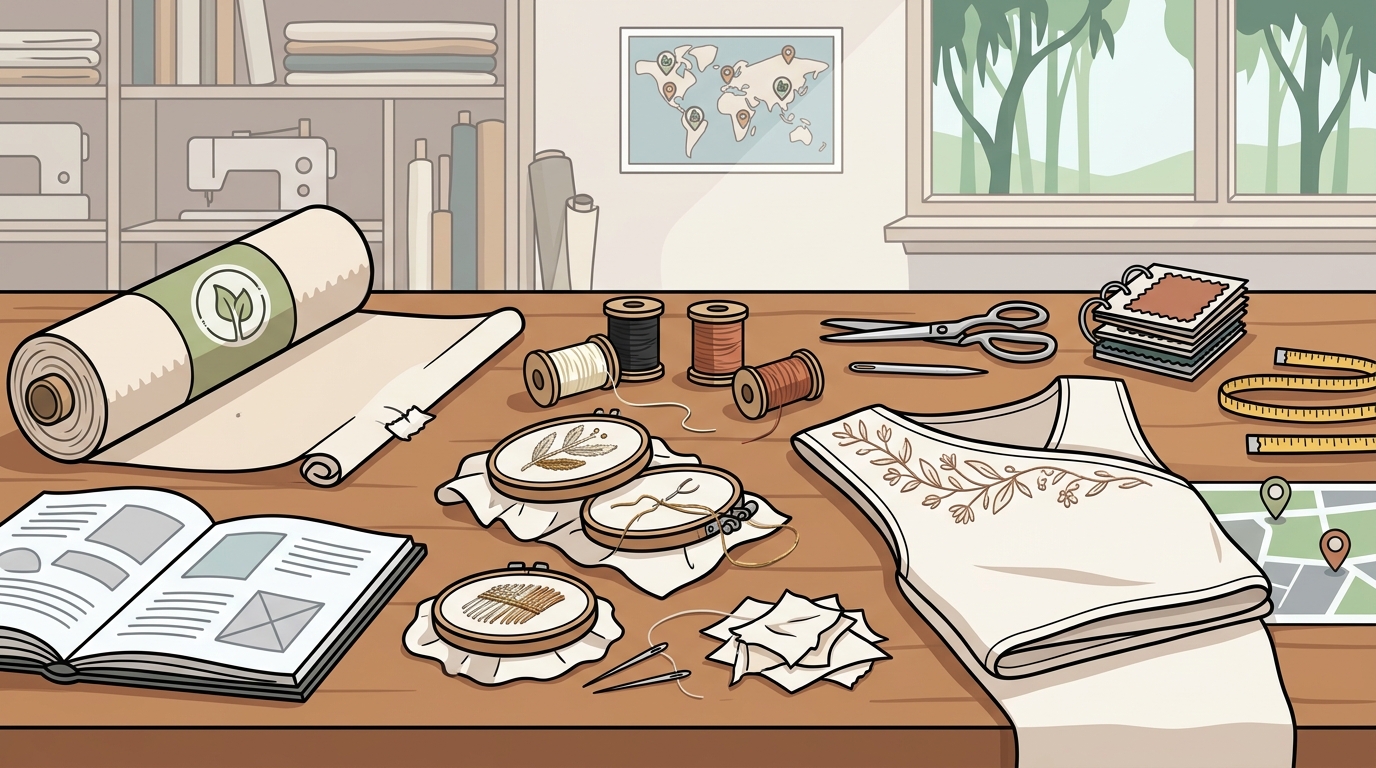
Hand-finished embroidery is the defining feature of many premium Australian designer tops. These techniques are not just about adding color; they are about adding texture and dimension. Common techniques include French knots, which create raised dots; blanket stitch, which is often used for edging; and cutwork, which involves removing sections of fabric to create intricate patterns. Each technique requires a different level of skill and time, contributing to the overall value of the garment.
French Knots and Texture
French knots are a classic embroidery technique that adds a three-dimensional element to a flat fabric. They are often used to create floral patterns or to highlight specific design elements. The size and density of the knots can vary, allowing for a range of visual effects. In a signature cotton top, French knots might be used to create a subtle daisy pattern or to accentuate the collar and cuffs. This level of detail is difficult to replicate with machine embroidery, making it a key indicator of hand-finishing.
Cutwork and Lace
Cutwork is a more advanced technique that involves cutting away parts of the fabric and stabilizing the remaining sections with embroidery. This creates a lace-like effect that is both delicate and strong. It is a labor-intensive process that requires precision and patience. Brands that incorporate cutwork into their designs are demonstrating a high level of craftsmanship. The resulting fabric is often lighter and more breathable than solid cotton, making it ideal for warmer weather. This technique is a testament to the skill of the artisans who execute it.
Care and Longevity of Hand-Finished Pieces
Investing in a hand-finished cotton top requires a commitment to proper care. These garments are designed to last for years, not seasons, but they need to be treated with respect to maintain their quality. The general rule is to wash less and air more. Natural fibres like cotton can withstand frequent washing, but the hand-embroidery may be damaged by aggressive machine cycles. Always check the care label for specific instructions, but when in doubt, opt for a gentle hand wash or a delicate machine cycle.
Washing and Drying
For most hand-finished cotton tops, a cold, gentle machine wash is acceptable if the garment is turned inside out and placed in a garment bag. This protects the embroidery from snagging on other items. Avoid using bleach or harsh detergents, as these can fade the colors and weaken the fibres. After washing, line dry the garment in the shade. Direct sunlight can cause colors to fade, and the heat can shrink the cotton. Tumble drying should be avoided entirely, as the heat and agitation can distort the shape of the garment and loosen the hand-stitching.
Ironing and Storage
Ironing can help restore the crispness of cotton, but it must be done carefully. Use a warm iron and iron the embroidery from the reverse side, placing a towel between the iron and the fabric. This prevents the heat from flattening the raised stitches. When storing your top, fold the knits and hang the wovens on a wooden hanger. Give lace and cutwork pieces a little room to breathe, as they can be more delicate than solid fabrics. Proper storage ensures that your investment remains in excellent condition for years to come.
Key Takeaways
- "Australian designer" refers to the creative direction and design oversight, not necessarily the location of manufacturing.
- Hand-finished embroidery involves techniques like French knots and cutwork that add texture and depth.
- Organic cotton is a preferred base fabric for its durability and ability to hold embroidery well.
- Look for brands that are transparent about their supply chain and artisan partnerships.
- Certifications like OEKO-TEX ensure that the fabric is free from harmful substances.
- Proper care, including gentle washing and line drying, is essential for maintaining the quality of hand-finished pieces.
- Investing in high-quality, hand-crafted garments is a commitment to slow fashion and longevity.
Frequently Asked Questions
Is Say The Label made in Australia?
No, Say The Label is designed in Melbourne, Australia, but the garments are handcrafted in India by artisans. The design, fabric selection, and quality control are managed by the Australian team, while the physical production takes place in specialized workrooms in India.
What is the difference between machine and hand embroidery?
Machine embroidery is fast and uniform, while hand embroidery is slower and allows for more texture and variation. Hand-finished pieces often have a more organic, three-dimensional look that cannot be replicated by machines.
How do I know if a cotton top is organic?
Check the fabric label for certifications such as GOTS (Global Organic Textile Standard) or OEKO-TEX. These certifications ensure that the cotton was grown without synthetic pesticides and that the fabric is free from harmful chemicals.
Can I machine wash a hand-finished top?
Yes, but you should use a cold, gentle cycle and place the garment in a bag. Turn it inside out to protect the embroidery. Avoid bleach and tumble drying, as these can damage the hand-stitching.
Why are hand-finished garments more expensive?
Hand-finishing is a labor-intensive process that requires skilled artisans and significant time. The cost reflects the expertise and care involved in creating each piece, as well as the high-quality materials used.
Where can I find more information about Say The Label's fabrics?
You can visit the Fabrics and Techniques page on the Say The Label website to learn more about the specific cloths and handwork methods used in their collections.