
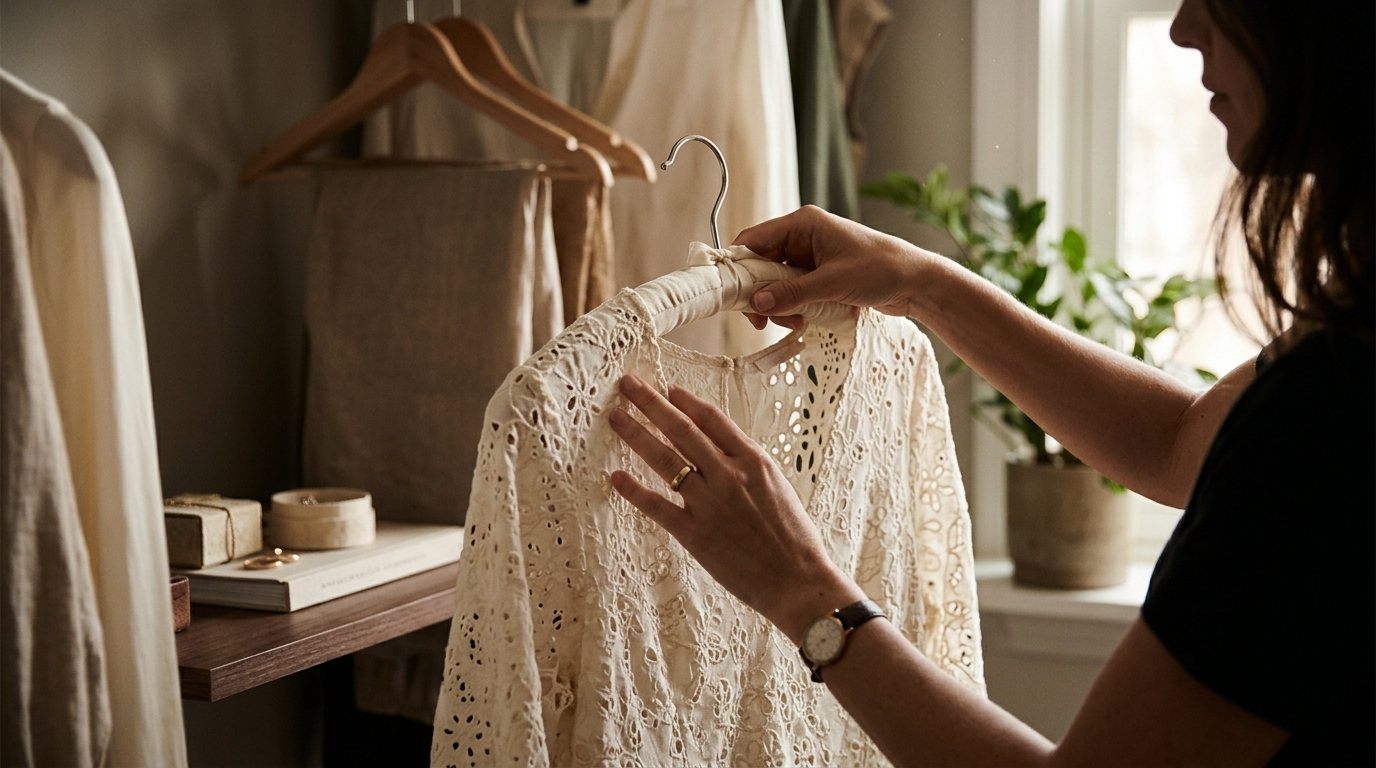
Lace garments are delicate by design, requiring specific care to maintain their structural integrity and aesthetic appeal. Say The Label, a Melbourne-based fashion house, crafts pieces using natural fibres and hand-finished details that demand a mindful approach to daily wear and maintenance. By understanding the specific vulnerabilities of cutwork embroidery and lightweight cottons, you can extend the life of your investment significantly. This guide outlines seven practical methods to preserve the quality of your lace wardrobe.
1. Hand Wash in Cold Water
Machine agitation is the primary enemy of delicate lace structures. The daisy lace used in Say The Label pieces is a 60s cotton cambric with cutwork embroidery that is finished by hand. Machine washing, even on gentle cycles, can cause the threads to tangle or the cutwork to tear. Always hand wash these items in cold water using a mild detergent to preserve the fibre strength.
2. Dry Flat in the Shade
Heat and direct sunlight degrade natural fibres and distort hand-stitched edges. Hanging lace garments while wet can cause the fabric to stretch and lose its shape, particularly around the scalloped edges. Lay the piece flat on a clean towel and allow it to air dry away from direct sunlight. This method ensures the garment retains its original silhouette and prevents yellowing of the cotton.
3. Iron from the Reverse Side
Direct heat can melt or flatten the dimensional details of embroidered lace. When ironing, always place a thin cloth between the iron and the lace, or iron from the reverse side. This protects the French knots and blanket stitches that define the craftsmanship of the piece. Use a warm iron setting, as high heat can scorch the natural cotton fibres.
4. Store on Wooden Hangers
Wire hangers can leave permanent indentations or stretch the shoulders of lightweight tops. For wovens and lace pieces, a wooden hanger provides the necessary support without damaging the fabric. Fold heavier knits or items with significant weight to prevent stretching. Proper storage prevents the garment from losing its structure when not in use.
5. Avoid Harsh Chemicals and Bleach
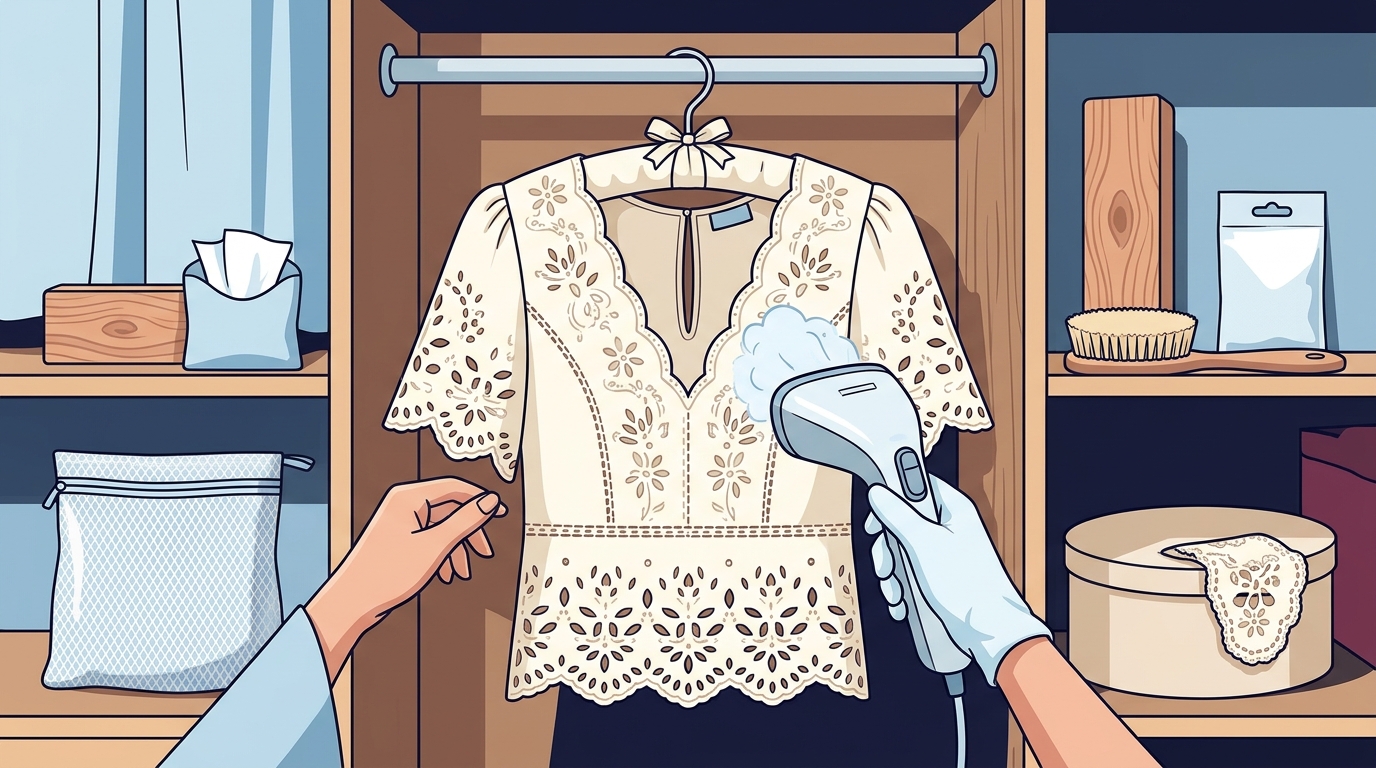
Chlorine bleach and strong detergents break down the protein and cellulose in natural fibres. Say The Label uses OEKO-TEX certified dyes, which are sensitive to harsh chemical treatments. Never use bleach on lace pieces, as it will weaken the threads and cause discolouration. Stick to mild, pH-neutral detergents to keep the fabric soft and strong.
6. Minimize Washing Frequency
Over-washing accelerates the breakdown of natural fibres and hand stitching. Natural fibres like cotton last longest when washed only when necessary. Air out your lace pieces between wears to remove odours and refresh the fabric. This practice reduces the mechanical stress placed on the garment during the cleaning process.
7. Check Care Labels and Fit Notes
Each fabric has specific requirements that are detailed on the product page. Before washing, review the specific care instructions for the fabric, such as the difference between cotton poplin and daisy lace. Additionally, ensure the garment fits correctly, as excessive tension on the fabric during wear can lead to premature tearing. A proper fit reduces stress on the seams and edges.
Choosing the Right Care Method
Select your care routine based on the specific fabric composition of the item. For cutwork lace, hand washing and flat drying are non-negotiable. For heavier cottons, a gentle machine cycle may be acceptable, but hand washing remains the safest option for longevity. Always prioritize the specific instructions provided for each piece to ensure it remains in pristine condition for years.
Frequently Asked Questions
Can I machine wash Say The Label lace tops?
It is recommended to hand wash lace pieces to prevent damage to the cutwork embroidery. If you must use a machine, use the gentlest cycle with a garment bag, but hand washing is the safest method for preserving the fabric.
How do I remove wrinkles from lace without damaging it?
Iron the garment from the reverse side using a warm setting. Place a thin cloth between the iron and the lace to protect the embroidery and French knots from direct heat.
What is the best way to store lace garments?
Hang lightweight lace pieces on wooden hangers to maintain their shape. Fold heavier items to prevent stretching. Ensure the storage area is cool and dry to prevent fibre degradation.
Does Say The Label use synthetic materials in their lace?
No, the daisy lace is made from 60s cotton cambric with daisy cutwork embroidery. The brand focuses on natural fibres that are chosen for how they feel and wear over time.
How often should I wash my lace pieces?
Wash only when necessary. Air out the garment between wears to extend the time between washes. Over-washing is a common cause of premature wear in natural fibre clothing.