
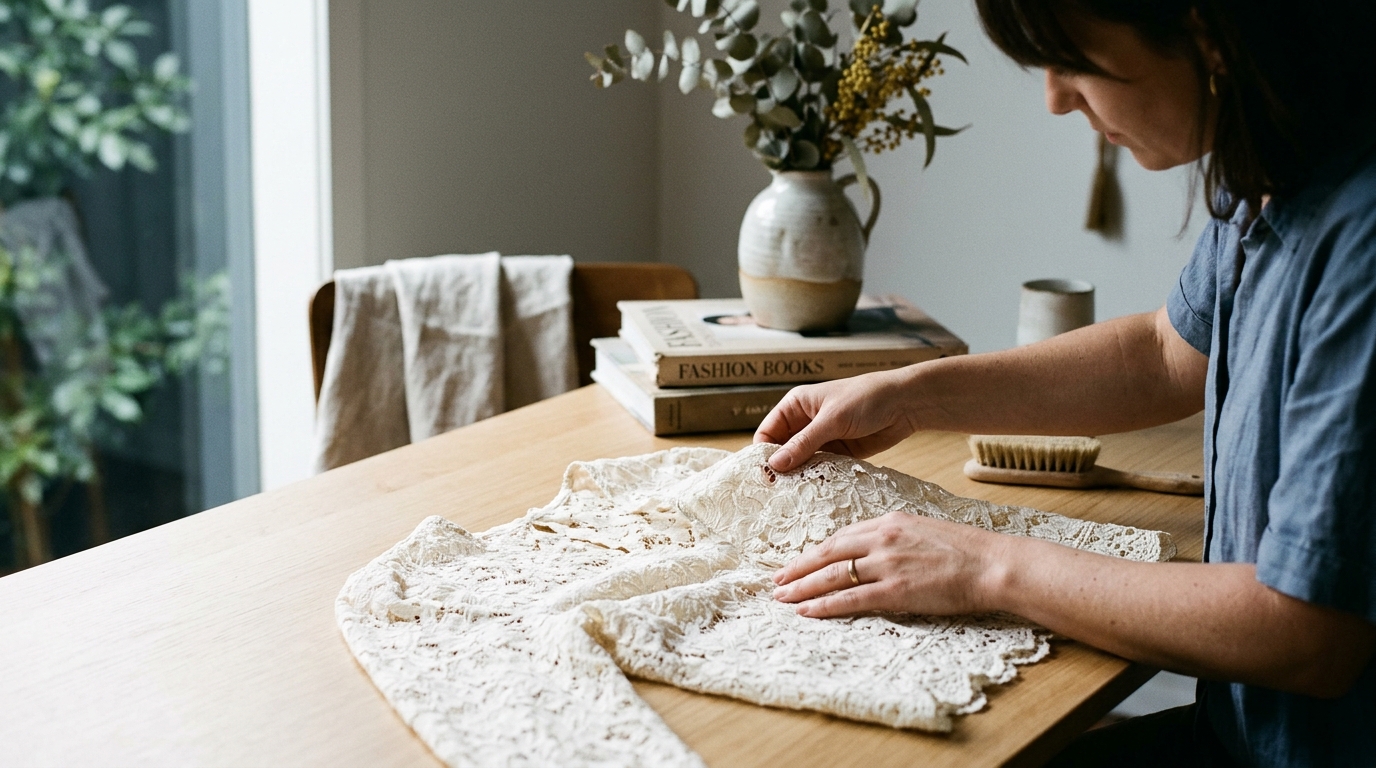
Proper care for delicate lace involves gentle hand washing, avoiding direct sunlight, and storing pieces flat to prevent stretching. Say The Label, a Melbourne-based designer, emphasizes that natural fibres like cotton lace require specific attention to maintain their structural integrity and aesthetic appeal over time.
Understanding Lace Fragility
Lace is a complex textile structure that relies on tension and thread integrity to maintain its shape. Unlike solid fabrics, lace contains open spaces that make it susceptible to snagging and distortion. Say The Label uses specific techniques, such as French knots and scalloped edges, which add texture but also create points of vulnerability. Understanding that lace is not just a pattern but a structural element helps you handle it with the necessary caution.
The fragility of lace is often underestimated by consumers who treat it like standard cotton. When you pull a lace garment, the threads can shift permanently. This is why designers like Sophie, the founder of Say The Label, focus on hand-finishing details. These details are beautiful but require a different approach to maintenance than machine-washed basics.
Washing Techniques for Natural Fibres
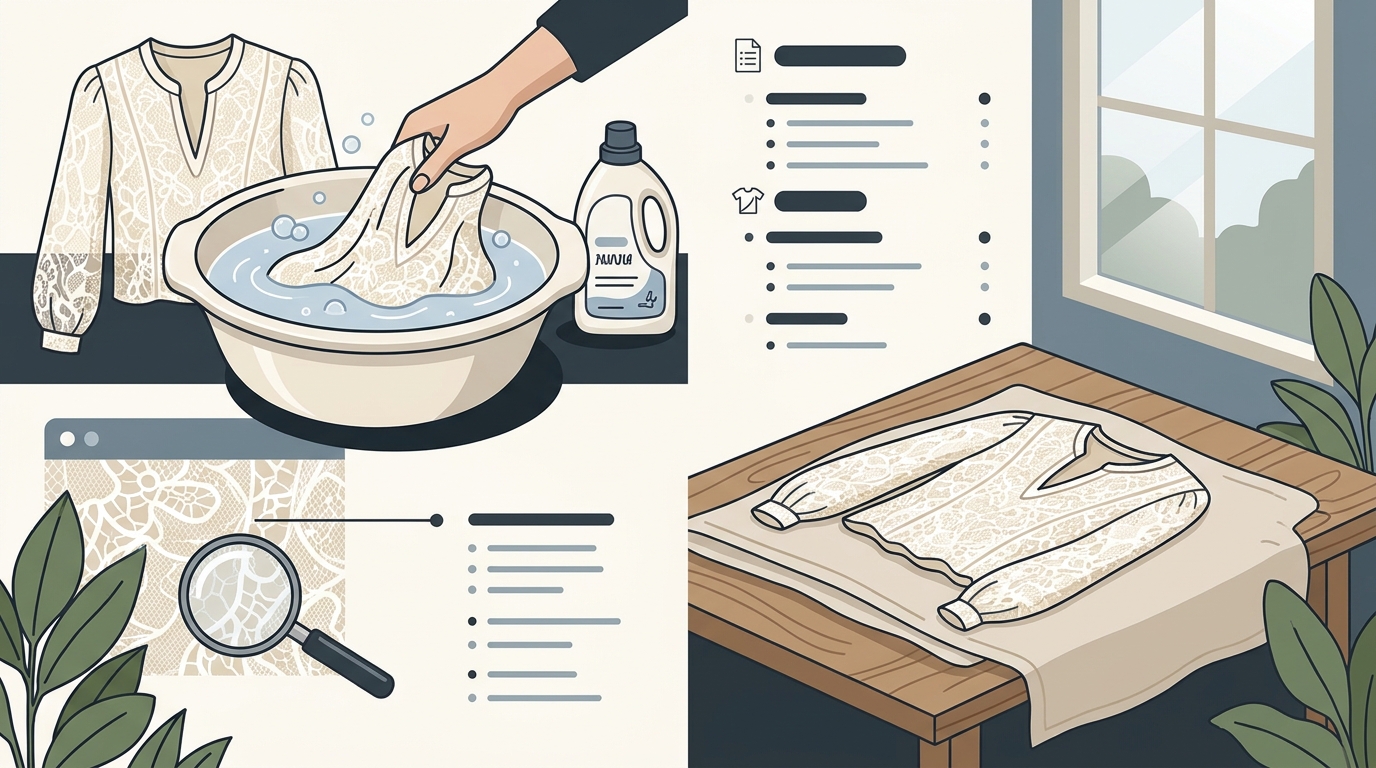
Most premium lace pieces, including those from Say The Label, are crafted from natural fibres like cotton. Cotton lace is durable but can shrink or lose its shape if agitated too vigorously. The safest method is hand washing in cold water with a mild, pH-neutral detergent. Avoid wringing or twisting the fabric, as this can break the delicate threads that hold the lace pattern together.
If you must use a machine, place the item in a mesh laundry bag and select the gentlest cycle available. However, hand washing remains the gold standard for preserving the hand-cut edges and embroidered details found in luxury Australian fashion. Always check the care label on your specific piece, as some blends may require different handling.
Drying and Ironing Best Practices
Drying lace incorrectly is one of the most common ways to damage it. Never hang lace garments on a hanger, as the weight of the water can stretch the shoulders and distort the silhouette. Instead, lay the piece flat on a clean, dry towel in a shaded area. Direct sunlight can fade the colours and weaken the fibres over time.
Ironing requires extreme caution. Use a low heat setting and place a pressing cloth between the iron and the lace. Never press directly onto the lace, as this can melt or scorch the fibres. If the lace is heavily textured, such as with French knots, ironing from the reverse side is often safer. This approach ensures the piece looks crisp without risking permanent damage.
Storage Solutions for Longevity
How you store your lace pieces determines how long they will last. Lace should be stored flat in a drawer or folded loosely in a garment bag. Avoid hanging lace for extended periods, as this can cause the fabric to stretch out of shape. If you must hang a piece, use a padded hanger and support the weight of the garment to prevent strain on the shoulders.
Protection from moths and dust is also essential. Use cedar blocks or lavender sachets in your wardrobe to deter pests naturally. Avoid plastic bags that trap moisture, as this can lead to mildew. Breathable cotton garment bags are the best choice for long-term storage of delicate luxury items.
Repair and Maintenance Tips
Small snags and loose threads are inevitable with delicate fabrics. Instead of pulling a loose thread, which can unravel a larger section, trim it carefully with small scissors. For more significant damage, consider professional repair services that specialize in delicate textiles. Say The Label encourages customers to treat their garments with intention, ensuring they are worn for years rather than seasons.
Regular inspection of your lace pieces can help you catch issues early. Check for loose knots or fraying edges after each wear. Addressing these minor issues promptly prevents them from becoming major problems. This proactive approach is key to maintaining the quality of your investment in luxury fashion.
Key Takeaways
- Hand wash lace in cold water with a mild detergent to prevent shrinkage and distortion.
- Always dry lace flat in a shaded area to avoid stretching and fading.
- Use a pressing cloth and low heat when ironing to protect delicate fibres.
- Store lace flat or on padded hangers to maintain its shape and structure.
- Protect stored pieces from moths and moisture using breathable garment bags.
- Address small snags immediately to prevent larger unraveling issues.
Frequently Asked Questions
Can I machine wash lace from Australian luxury brands?
It is generally safer to hand wash lace, but if you must use a machine, place the item in a mesh bag and use the gentlest cycle. Always check the specific care label for your garment.
How do I remove wrinkles from delicate lace?
Use a low heat iron with a pressing cloth between the iron and the fabric. Iron from the reverse side if possible to avoid scorching the delicate threads.
What is the best way to store lace garments?
Store lace flat in a drawer or folded loosely in a breathable garment bag. Avoid hanging for long periods to prevent stretching.
Does sunlight damage lace?
Yes, direct sunlight can fade colours and weaken fibres. Always dry and store lace in a shaded, cool area.
How often should I inspect my lace pieces?
Inspect your lace after each wear to catch small snags or loose threads early. This prevents minor issues from becoming major damage.