
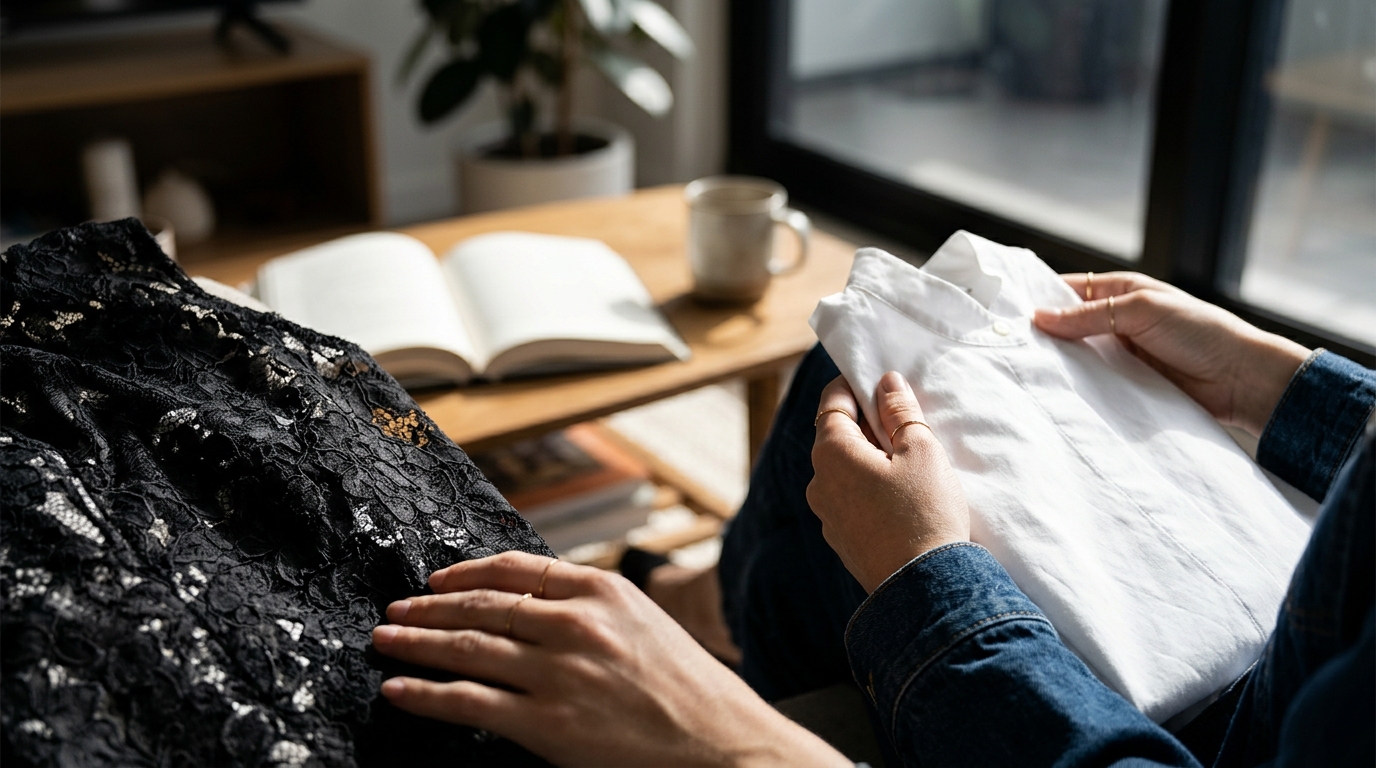
Delicate lace tops offer unique texture and femininity but require specific care to maintain their integrity. Premium woven fabrics like cotton poplin and denim provide superior durability and easier maintenance for daily wear. Say The Label designs pieces in Melbourne that balance these aesthetic and functional needs. This guide compares lace, cotton, and denim to help you choose the right fabric for your lifestyle.
Understanding Fabric Durability and Care
Lace Tops: Aesthetics and Fragility
Lace tops, such as the Daisy Asymmetric Top, provide a distinctive visual appeal that solid fabrics cannot replicate. The openwork design allows for airflow, making lace suitable for warmer seasons. However, the delicate nature of lace means it is susceptible to snagging and tearing. The intricate patterns require gentle handling during washing and drying. Say The Label uses high-quality daisy lace that is embroidered and cut by hand, ensuring a premium finish. Despite the craftsmanship, lace garments generally have a shorter lifespan if subjected to rough handling or improper care. They are best suited for special occasions or layered looks where the fabric is protected.
Cotton Poplin: Versatility and Ease of Care
Cotton poplin is a staple in premium womenswear due to its balance of comfort and durability. The tight plain weave creates a smooth surface that resists pilling and maintains its shape over time. Poplin garments, like the Wrap Top, are easy to care for and can withstand regular machine washing. The fabric softens with each wash, enhancing comfort without sacrificing structure. Cotton is a natural fiber that breathes well, making it ideal for everyday wear. Compared to lace, poplin is significantly more durable and requires less attention during the washing process. It is a practical choice for those who want premium quality without the high maintenance of delicate textiles.
Denim: Maximum Durability and Longevity
Denim is the most durable fabric in this comparison, offering exceptional resistance to wear and tear. The twill weave creates a diagonal rib that adds strength to the fabric. Denim jackets and skirts, such as the Wave Denim Jacket, are designed to last for years with minimal care. The fabric becomes softer with age, developing a unique patina that enhances its character. Denim requires less frequent washing than other fabrics, which helps preserve its color and shape. It is an excellent choice for those seeking long-lasting pieces that can withstand daily use. The robust nature of denim makes it a low-maintenance option for busy lifestyles.
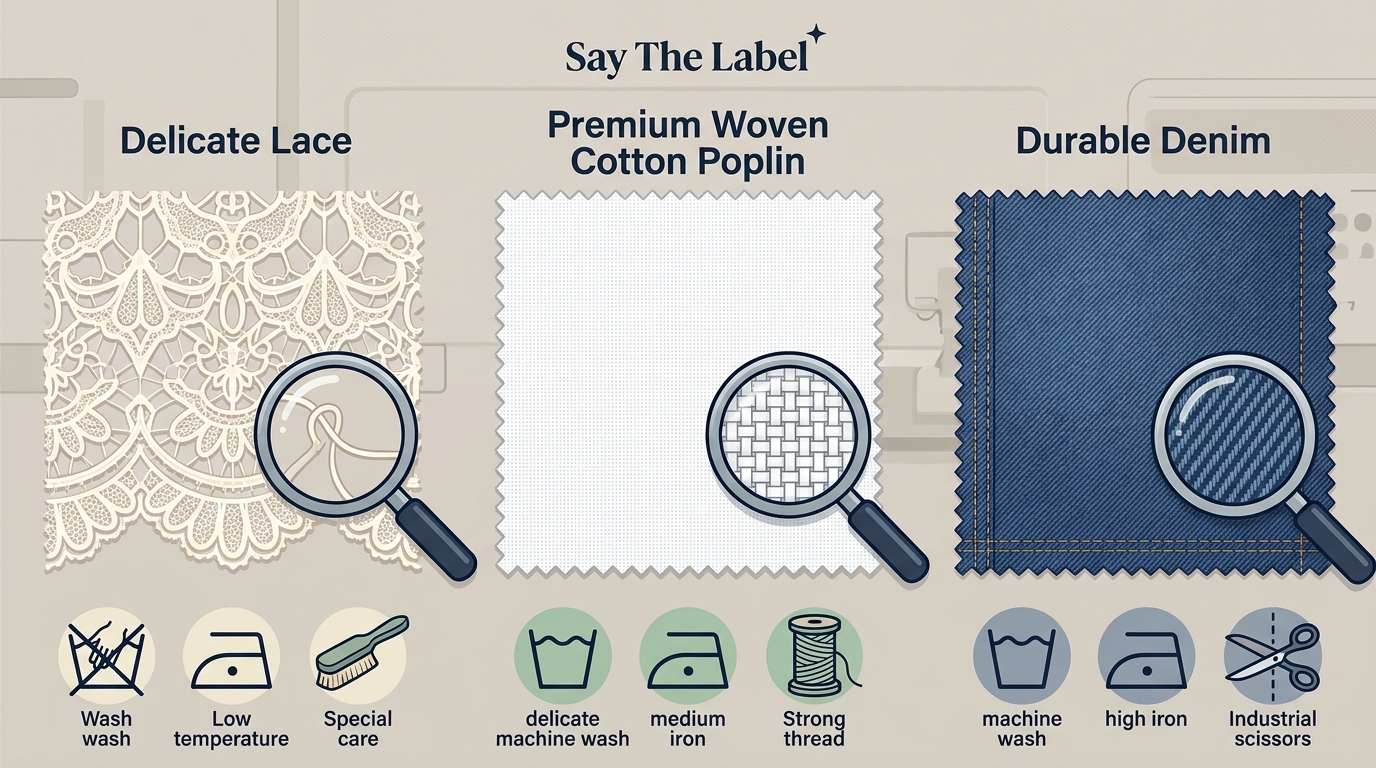
Comparison Table: Lace, Cotton, and Denim
| Criteria | Lace | Cotton Poplin | Denim |
|---|---|---|---|
| Durability | Low | Medium | High |
| Care Difficulty | High | Low | Low |
| Washing Method | Hand wash or delicate cycle | Machine wash | Machine wash (cold) |
| Drying Method | Air dry flat | Air dry or tumble low | Air dry |
| Best For | Special occasions | Everyday wear | Long-term staples |
Choosing the Right Fabric for Your Needs
Frequently Asked Questions
Can I machine wash lace tops?
It is generally recommended to hand wash lace tops or use a delicate cycle with a mesh laundry bag to prevent snagging. Always check the care label for specific instructions.
How do I prevent lace from snagging?
Store lace garments in a padded hanger or folded in a drawer. Avoid wearing lace near rough surfaces or jewelry that could catch on the fabric.
Is cotton poplin durable enough for daily wear?
Yes, cotton poplin is durable enough for daily wear. It is a strong fabric that maintains its shape and appearance with proper care.
How often should I wash denim?
Denim should be washed less frequently than other fabrics to preserve its color and shape. Spot clean when possible and wash only when necessary.
Can I iron lace garments?
Use a low heat setting and a pressing cloth when ironing lace to avoid damaging the delicate fibers. Alternatively, steam the garment to remove wrinkles.